Showing posts with label Olympics. Show all posts

Wednesday, March 2, 2022

The Olympics of Kano Jigoro

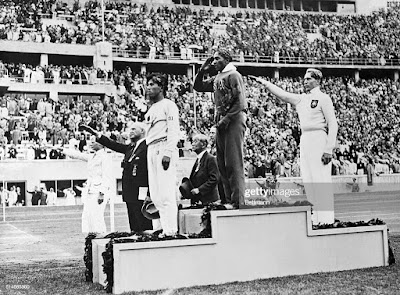
On a sunny 4th of August, the Japanese athlete, Naoto Tajima, leapt 7.74m into the history books of the 1936 Berlin Olympics. Triple jumper by speciality, he was more than a half decent long jumper too. He came third that day and stood on the pantheon taking his place and laurels into history. Standing next to Jesse Owens who was on his way to winning four gold medals (and somewhat poking a stick in the eve of a certain dictator) (oh, and wearing very early Adidas running shoes) outlines his achievements.

However, this story is about the Japanese delegation which had been lobbying hard for a number of years to host the 1940 Olympics, a petition which subsequently was successful. The head of the Japanese Olympic Committee, Kano Jigoro went as far as to say that if Japan was not awarded the games, then the Olympic Committee had "got it wrong". And he would organize another games, bigger and better.

This was to be Japan's final showing in the Olympics until 1952 in Helsinki, the invitation letter to London 1948 presumably lost in the post. Kano Jigoro's vision for 1940 didn't come to pass as no one had mentioned the coming invasion of China and Japan, subsequently, being shown the host nations door, however he did go down in a little bit of history. Between Jesse Owens and Naoto Tajima, you can make him out in the background, not looking very happy. But probably better than the host on that day.


Thursday, July 22, 2021

Tokyo - An Olympic Finishing Line?

In 2012, London hosted what can only really be appreciated as a successful Olympics. Yes, I know that's a little tricky to define but let's take it based on a straw pole of the popular vote, the man on the top of the Clapham omnibus was more positive than negative toward the extravaganza. Not sure that can be said in Tokyo of Mrs Watanabe on the Sangenjaya chin chin densha in the midst of a pandemical lockdown. When Ben Johnson was caught cheating he said to his mother in a hotel in Seoul, "mum, no one died". Let's hope Thomas Bach can say the same, come August 24th...

The rings of steel have been in place for the last week or so, to control crowds around the sporting venues, except there aren't any crowds, just empty stadia with canned laughter and annoyed locals who have the inconvenience of long walks in the summer heat to find a way into their apartment when the roads are blocked and locked. Blue Impulse, the aerobatic display team, have rehearsed writing the insignia in the sky, which may or may not come off depending on the weather (side note, the time for rehearsal was not released so as to avoid crowds, no one seemed to consider that for an aerial display, you just look up). And vaccinations have reached an astonishing 15% or so of the population, 85% below the official declarations just a few months earlier.

Japan was first awarded the Olympics in 1940 only to see this one fizzle out after a small invasion of China. '64 was a coming out party and the infrastructure lasted until recent years so let's say that was also a positive. Macron is here to pick up the baton for Paris but the "Olympic Bubble" has popped, teams are abandoning the "Village" and Brisbane has been awarded 2032 after being the sole candidate to contest the bid. So the question has to be raised, if no one is into it anymore, has the Olympics run its course? I cannot recognize the athlete highly enough, their hard work, dedication and sacrifice is unquestionably of heroic proportions. But as an institution, is it time to weave a cocoon and aim for a butterfly reboot one day in a land far, far away? Mrs Watanabe would probably think so...


Sunday, February 17, 2019

Ten Months and Nineteen Days

Between September 20, 2019 and August 9, 2020, a mere ten months and nineteen days, Japan will host two of the greatest sporting events there are to be held upon this small blue planet. The Rugby World Cup will initiate celebrations inside The Ajinomoto Stadium in western (far western) Tokyo, though for the tour of the tournament it will be labeled, somewhat confusingly, The Tokyo Stadium. The opening match between Japan and Russia is being held here as the new National Stadium, under construction for an eternity, will not be complete. By a matter of a few weeks. Go figure...

Japan is slowly becoming conscious of the events to come. However the excitement is unlikely to build until a few weeks prior to the starting whistle though this fall we can look forward to moments of glory the likes of which are rarely seen. Snap shots in time such as Jonah Lomu inventing the Maori Side Step through, and over, a hapless Mike Catt in 1995, or Jonny Wilkinson snatching victory in the final seconds of 2003. Off the wrong foot!. (Spoiler alert, I was in stadium for that one). But the greatest for this host country would be Japan risking all and going for victory as they did so incredibly in 2015 (the South African fans subsequently gave up their seats on the train back to London for the Japanese fans; respect is all in rugby). 

It's been a while since we've enjoyed a major, global event in Japan. FIFA World Cup in 2002 was really the last one, some seventeen years ago. Awesome in its own right, we saw a media panic in advance of the invasion of the Mongol Hordes (metaphorically speaking and my apologies to my Mongol readers!) and the British Hooligans (for who, the local police kindly developed extra large handcuffs). The invasion though was called off due to high ticket prices and the cost of air transport in those days, somewhat out of the pocket range of your average hooligan. But in closing days of September 2019, Let the Games Begin!

PS: Invictus. I once asked Jonah (whom I had the privilege to get to know) if Nelson Mandela did actually say "you frighten me a little bit" as in the movie. He smiled but didn't answer. 


Tuesday, April 11, 2017

A legacy lost?

With three years to go until the Summer 2020 Olympics Japan is currently in the process of realising it has a new issue on its hands. The stadium debacle is well known (though the focus has been on cost rather than arguably political expediency) as is the problem of a plagiarised logo followed closely by the men only golf club voting to admit women only on pain of losing the event and the uproar of restaurants across the capital that if smoking is banned then their customers will be unfairly impacted and go elsewhere (not to smoke?).

But the realisation that, due to the structure of the system, there are actually insufficient teachers, both Japanese and international, able to raise the level of English (whether you like it or not, it is the default global language) of their students to a basic communication level, effectively sounds the death knell of 2020 being an international tournament accessible by the majority of the country. It will be a domestic sporting event, all be it an outstanding one performed on the stage of the combined live world media. But here it is now unlikely to raise and inspire a new generation to look beyond the coastline. Which wouldn't be such a problem if the country didn't have another problem with the ever declining base population. 

Unfortunately the base population is set to decline by over 20% in the next thirty years and soon after the ratio of working population to those already retired will be approaching parity. Japan, the world's third richest economy has just ranked 40 out of 48 surveyed countries in a UN study on English as a second language. The day the doors need to open and even basic care workers are welcomed in, this skill would soften the surprise of a foreigner at the front door. Japan can turn on a dime when needed, but with the best will in the world you don't wake up in the morning fluent in a new language. It takes time, commitment and not a little inspiration. This Olympic legacy has sadly probably already been lost. Time for a re-think.


Monday, April 3, 2017

When a nuclear missile is aimed in your general direction

As a matter of choice I rarely write anything political on TenguLife. But here goes. In the closing days of a hot and stifling 1998 August, the population came home to the somewhat shocking news reports that North Korea had launched a missile which had flown through the skies above Japan before landing harmlessly in the Pacific ocean to the east. The shocking part though wasn't the flight of the missile as such, it was known North Korea was working on this, it was that Japan hadn't actually detected it and American satellites had picked it up in flight, politely informing the government later that afternoon.

And so the country has known for nearly twenty years that a ballistic strike from Kita-Chosen was possible but lived securely in the knowledge that the deterrent effect of ceasing to exist if anything did land in Japan would deter the regime from testing its abilities in the theatre of real life. However, increases in missile tests, developments in technology toward fast-launch solid fuel ordnance and the dark cloud of a nuclear bomb program have raised concerns further in recent years and schools have even started holding evacuation drills. Just in case. 

Patriot missile batteries can occasionally be seen deployed in the grounds of the Ministry of Defence (Boekicho) in Ichigaya, conveniently in the centre of the capital, though these are due to be withdrawn and enhanced by 2020, just in time for the Olympics..., but it isn't this causing concern at the moment. Seoul is approximately thirty miles from one of the largest conventional forces on the planet and when the button is provoked, will suffer horrific damage from a rain of effectively unstoppable long range artillery. And if that button is connected to the missile system, Tokyo will likely be next. And so seriously, this is no time to get trigger happy. Let's let the diplomats weave their magic. After all, playing golf and watching The Simpsons is much safer. For all of us.


Tuesday, September 6, 2016

The answers to your questions

Japan can be confusing. Fascinating but confusing. And there is an Olympics at the end of the Super Mario tunnel. So the question has been raised, for quite some time now, as to exactly how will the country accommodate an international influx which is largely unlikely to speak very much of the local language and who understand even less of the landscape around them. In truth, this isn't an Olympics question though; twenty million tourists poured through Japan's doors in the last twelve months. The issue is not four years in the future, it's very much front and centre here today.

And so how do you find your way through a country and culture that is so fundamentally different from so many others. People here don't, on the whole, speak a lot of English. Nor are they too concerned about it either. Japan has done pretty well for itself without the assistance of the Bard. Though there are chinks in the armour; ask a taxi driver a question and he may well whip out his cheat sheet and ask you to point to the question your asking. Or as mine recently did, he may well tell you the cheat sheet is in the boot. Rome was not built in a day.

But with the advent of Pokemon Go! the world is a rapidly changing place. Augmented Reality allows the user to hold up their phone and read road signs in the language of their choosing. The boat may have been missed in traditional terms as to integrating an in-bound diaspora but teaching children to speak English is only one arrow in the quiver of fascinated interest. There are some very clever people out there who can answer the simplest of questions "what shall I do tonight?" and not a human voice is raised in answer. Our world is changing and the answer is at your fingertips. Literally.


Wednesday, January 20, 2016

Two steps forward - Stadiums and Swastikas

Following the scrapping of the Zaha Hadid design for a new National Stadium the new contender has been finally selected. In a burst of what must rank as some of the most intense creativity by an architect ever, plans for the latest incarnation were developed within fourteen weeks which is a significant improvement over the two+ years taken to create the previous ones. There is, however, some debate in the popular press as to whether there was a photocopier involved.  

Added to this there are now reports of disputes over payments and contract details and copyright infringements  for the work completed to date. At the same time the latest iteration of the official Olympic logo is in process of selection following the unfortunate withdrawal of the first version under a cloud of allegations regarding quite how authentic the design actually was. The several thousand entries have been whittled down to a handful and we should see it for ourselves relatively soon.

Meanwhile, other preparations for the 2020 Games continue to progress. One interesting question has arisen as to whether the symbol used for a temple should be updated on new maps to avoid a few raised eyebrows. An ancient Buddhist mark, it was unfortunately borrowed by the Nazis in the 1930s, inverted and rebranded "the Swastika". It's a fair point; the unsuspecting tourist could be forgiven for being surprised as to how many Third Reich branch-offices there appear to be around the country.


Wednesday, October 7, 2015

The 1940 Summer Olympics

1940 doesn't immediately bring to mind the concept of The Olympics, the world being somewhat distracted by a raging war snowballing across the globe at the time. However, the games were indeed awarded and preparations were underway before events overcame the host city which, four years after Hitler's Olympics in Berlin, was Tokyo. Japan had seen them as something of a PR coup, especially given the fighting in China which was leading to a growing isolation from Europe and America.

It eventually fell foul of the Japanese military though which had at first tolerated the preparations, assuming the war in China would be concluded swiftly but was coming under pressure as hostilities continued. The cancellation became inevitable in the summer of 1938 as resources continued to be directed towards the overseas actions and the high command lost patience with what was being seen as more and more of a distraction. Surrendering the cause, the presiding minister pledged the games would be held one day, when peace returned to Asia. A pledge eventually fulfilled at the country's coming out party in 1964.

So 2020 is not the second time that Tokyo has prepared for an Olympics but the third. Additionally, Sapporo, the main city of the northern island of Hokkaido, had also been planned for the Winter Olympics in 1940, something it could deliver finally in 1972. But with criticism of the make up of the organisation committee, no national stadium and a logo allegedly copied from Belgium, it is not going quite as smoothly as could be desired. However, the loss is not going to be in sports, that will eventually come together, the real loss will be in the opportunity to further internationalise the country. That race, sadly, looks to be already lost.


Olympics


Tuesday, September 29, 2015

Babe Ruth and the 2020 Olympics

So the proposals are out for the final sports to be included in the troubled 2020 Olympics including skateboarding (didn't realise it was a sport but am open minded to the concept), surfing (small problem if there are no waves...), karate (actually not a huge sport in Japan, judo is much the more popular event), bowling (the only ball sport that is not actually "played"; you "go" bowling) and baseball/softball. Baseball is extremely popular in Japan but with the proposal only providing for six teams, it somewhat underlines the point that it isn't really a global sport.

The hope would be that if baseball were selected, at least some of the games would be played out at the Jingu Stadium, currently home to the Yakult Swallows. Built in 1926, for a cost equal to a business class flight to California today, it saw the 1934 American All Star tour of Japan which included, amongst others, Babe Ruth and Lou Gehrig. The tour nearly cost the organiser his life as it was considered sacred ground to the right wing of the day, who got upset and tried to assassinate him. 

It's a vast, open stadium that somehow captures the atmosphere so much better than others and when the rains come down, the umbrellas go up and the beer girls get busy. But if you haven't been, you need to hurry, for it is slated for demolition and will relocate a short walk away to the current site of the National Rugby Stadium, Chichibunomiya, also slated for demolition and currently planned as a car park for the Olympics. At this rate there won't be anything left to demolish in Tokyo by 2020 but if you get the chance, go and watch a game, enjoy a beer, and remember, take your umbrella.


Meiji Jingu 1934
1934, Babe Ruth walks up to the plate and sends the ball into the stands 


Monday, August 17, 2015

It's not about the Trademark but the Integrity

Update: The Tokyo Olympic logo was formerly scrapped on 1 September, four days after announcing it was original and would be kept despite growing calls for change.


________________________

I rarely lose my temper. In fact, over twenty years I can only recall that occurring on two separate occasions. And the second is somewhat topical at the moment. A designer I'd asked to prepare a logo for a specific event had produced quite an interesting piece of work. Once incorporated into the entire corporate communication it was pointed out that another artist had produced something very similar. And she'd done it earlier and she was distinctly unhappy. Challenging the guy, he admitted it wasn't his own work but swore blind he could prove it wasn't a copy of hers.

And his evidence was not what I was expecting. The following day he brought someone I hadn't met before to explain to me. My designer hadn't designed anything, he'd copied it from this new guy. And to prove that he hadn't copied it from the original woman, the second person brought the book with him where he'd, in turn, copied it from. The designs were identical and I was somewhat livid. As a company, a well known brand in the market, these two wombats had opened us up to the allegation of being unethical cheats, nothing more than facsimiles of another's skills and talents. A photocopier could do that.

The argument over the design of the Japan Olympic logo is heading in the same direction. Once released it was quickly pointed out to bearing remarkable similarities to a European design. The defensive argument then being presented was that the European design hadn't been trademarked. Well, neither is Hamlet but I don't pretend that I actually wrote it. Or suggest I painted the Mona Lisa for that matter. Or even wrote Beethoven's Fifth. The London Olympic logo wasn't widely loved; but it also wasn't a copy. Japan has many incredible artists and designers. But we can all see where this is going. And that is so sad.


Saturday, August 8, 2015

Team sports, national pride and national pleasure

Japan doesn't have a national sport in the sense of a global rivalry. To have that it needs a team with history and legacy and although it is a potent force in Asian soccer, that's more a reflection of Asia than the Japanese national team, talented individuals many of them may be. But a national sport is more about the passion and the pride of a country than it is about individual players, and that raises the obvious question - why?

If you think of soccer the great rivalries that spring to mind are endless, Holland - Germany, Germany - England, Brazil - anyone; with rugby the same pattern appears with the great southern hemisphere teams of Australia, New Zealand, South Africa wreaking havoc over England, France and the rest of the northern countries on a four yearly basis. And indeed cricket, where the Ashes are played for pride and not players or India vs Pakistan where everyday people, rather than asking 'what's the score', will ask 'what's THE score'. There is simply nothing else to talk about.

Japan has many outstanding individual athletes, swimmers who break world records, gymnasts who perform incredible feats or ice skaters who can take on the best and win with grace. But team sports are still developing. Schools focus on soccer, baseball and basketball but only soccer is genuinely a global sport (some would argue but simply ask them to name the captain of their national baseball team). However that's not the point. Sport is about national and personal pride and pleasure, it's about the crowd cheering as much as the player shooting for the goal. But in Japan in 2015, genuinely, it's not about a single stadium.

Playing for pride

Monday, July 27, 2015

Tokyo heat, air-conditioners, thunderstorms and cruise missiles


It reached 34C in Tokyo today. With an effective temperature approaching 40C when you take into account that the official figures are measured in a small, sun sheltered box of the Met Office. Now it has to be said but I actually don't know the name of the Japanese Met Office so we'll stick with the UK version for now. But it was these people who figured out, in November 1944, just what a jet stream, a narrow and fast air current, running at about 30,000 feet, is all about. 

Realising these air currents ran around the world, Japan invented the world's first cruise missiles by launching balloon-bombs with timers that drifted across The Pacific until time was up and they dropped on the west coast of America (sadly taking the lives of a family, out for a picnic one day, the only arial bombardment casualties on the continent during WW2 hostilities). So these guys are clever and creative people. But if you want to know the weather, just look out of the window of a morning. If people are carrying umbrellas, it's going to rain.

But today was hot. Nighttime temperature is not forecast to drop below 26C. There's a noticeable lack of joggers on the streets and the taxis are running with full air-con blowing. Except, of course, for mine today. And the next seven days are all forecast at 32C or hotter accompanied with thunderstorms, except for Saturday. Which doesn't have thunderstorms. So I would just like to thank Willis Haviland Carrier, who, in 1902, invented the modern air-conditioning system. Thank you Willis, and if your decedents are reading this and outside, see you in October. When it's cooler.


Tuesday, June 16, 2015

RWC2019 - It's not a mailing address

Tokyo is gearing up for its next great sporting event, the 2020 Olympics. People are talking about it around town. Whether for, or against, everyone seems to have an opinion. The stadium is causing controversy, but complaining about cost and design after winning the bid seems a little unsporting. The latest reports are that it actually won't be complete on time for the Opening Ceremony. The roof is said to be the latest casualty and an element of the seating many be temporary. It doesn't take a genius to see where this is going; the city is getting a smaller stadium.

But that stadium is important. In 2002 not a single game was played in the capital city of the host nation. It will be a symbol of Japan for not just 2020, but for the next fifty years. In 2050, children will be able to walk by it and say "my grandfather built that." The arguments that it is disrupting the natural surroundings don't carry too much weight either. I walk the area regularly and, apart from the other stadiums around it, there are railway tracks and a feeder road to the highway system. Time to create something to be proud of.

However this is forgetting something important. Very important. In 2019 the same stadium is due to host the final of the Rugby World Cup. Even if it's not your sport, it's the second most popular event on the planet after the Football World Cup. The Olympics come in third. The word on the street in Tokyo though is that things aren't well in the RWC camp. In fact, it's being suggested the stadium is the least of their problems. This is a global event. Let's hope in 2050 children will also be able to say "my grandfather played in that."


Wednesday, May 6, 2015

The 2020 Tokyo Olympics - Timing could maybe have been a little better....

Sitting in a dark, hot and humid office, in the swelter of a Japanese summer, I once asked an engineering friend of mine if he could design something that would cool my room and brighten my day. He suggested an air conditioner with a lamp on top. Technically correct but not exactly what I was looking for. And the problem remains today after all these years. If only there was a device that could take in the heat and convert it to cubes of warmth, that could be stored until winter, we'd have a much more eco-friendly world. This must be one for Elon Musk.

However, back in Japan... the first signs of summer are peeking over the battlements. The temperature will rise to the mid-thirties, though with the added humidity it will feel like the earth has drifted worryingly closer to the sun. Thankfully, as tourists pour into the city, department stores offer oases of relief but as you dash from one to the other don't be surprised to find your clothes turning a darker shade of wet. And if you're air-con is suffering at home, time to call the repairman before he becomes the most popular guy on the block. Summer is going to be hot. And this brings us to the Olympics. 

In 1964, Tokyo hosted Japan's coming out party with a highly successful event in October of that year. The weather during Autumn is some of the most enjoyable there is. Warm but not hot. Dry but still comfortable. On the whole, very pleasant t-shirt time. And for 2020 the dates have been announced as 24 July until 9 August, the hottest, most humid time of the year. So bring your ice buckets and shorts to the party. And the week following the Closing Ceremony? Well that's Obon, the peak travel time of the year in Japan. Narita is already a nightmare of over capacity then even in a non-Olympic year. Whoever made that decision must be glad Qatar has made such a mess of 2022. I'd like to suggest they're "taking the heat" but even I think that's a pun too far...


The only thing to do in the heat!


Monday, April 6, 2015

Tokyo and Osaka - two very differently similar cities

In many ways the great cities of Tokyo and Osaka share a number of key characteristics. For a start they are both immense with Tokyo boasting some 13 million people with a local zip code and Osaka weighing in at a very respectable 8 million, equivalent to the size of London. Osaka makes better okonomiyaki but Tokyo has the choice of finer wines. The standard phrase for good morning in Tokyo is pretty much "good morning" whereas in Osaka you'll ask "are you making money?" Osaka were the merchants and Tokyo the administration.

As in many countries both the accent and the vocabulary differ significantly over the 500km dividing the two cities though many will insist there is only one "Japanese". The differences can indeed be so extreme that it becomes impossible to use the phone and I've actually seen people give up and communicate by fax (this was a while ago). But the populations of both love their golf and karaoke and sake is a binding passion.

However, one curious difference is that, although both city's inhabitants predominantly commute by subway, on returning to the surface on any of the thousands of escalators, Tokyoites stand on the left and Osakians stand on the right. But now the local Osaka Government has decided to convert the entire population to standing on the left to align with Tokyo in time for the 2020 Olympics. There's even the threat of a warning to be followed by a modest fine for repeat offenders. Seriously guys, good luck with that one. Grab your video cameras, you're about to witness civil disobedience  Kansai style. Standing on the right.


Monday, March 23, 2015

Shibuya - before you rise from the ashes, you have to be ash

So the Shibuya re-development in Tokyo continues. I've lived in Japan over twenty years and cannot, for the life of me, remember a time when there wasn't redevelopment around the station, home to three million commuters every working day of the year. In 2014 the main station building and the attached department store were closed and torn down and on March 22, 2015, it was the turn of the Tokyu (not a typo) Plaza, a positive warren of disconnected 1965 stores and restaurants.

This round of development was kicked off in the early 2000s when the Tokyo Metropolitan Government decided the area was desperately in need of a lick of paint. By co-incidence the early phases are set to be complete by 2020, I'm sure in time for the Olympics, to be held that autumn. The principle is to replace inefficient low rise buildings with sparkling new skyscrapers that will attract international business. An uptick in English wouldn't hurt that objective either.

When complete the area will, in principle, provide a coherent interconnection between station and stores. The first go at this, the relocation of a number of train lines to the new Hikarie building, was heralded as an outstanding success by the planners, and equally by the general derision from the commuters who actually need to transfer on a daily basis with long connections and deep, dark stairwells. The images though have to be said to look stunning.

Farewell Tokyu Plaza, hello the Phoenix.

West exit of the new Shibuya Station.
Environmentally friendly and easy to navigate.

Saturday, March 14, 2015

And the stadia are announced - now for the mascot

Four years will go fast. Really fast. Japan is a sports loving country. Distance running is more or less an obsession and people run in what Westerners would consider a racing flat. Although currently struggling, both football (the type with a round ball) and baseball (also a round ball) remain hugely popular with television audiences. But in four years time there will be a Rugby World Cup in Japan and the stadia have now been announced. From Hokkaido to Kyushu, twelve cities will host one of the world's great tournaments.

The original plans for an "Asian RWC" with matches held in Hong Kong and Singapore have been quietly scaled back and the the twelve venues are now spread across three of the four main islands of Japan. The new National Stadium is set to host both opening and final games and with a bit of luck  will actually be built by then. The National Rugby Stadium, Chichibu, is less than ten minutes walk from the main stadium and misses out completely which is a shame as it really needs a good wash and a lick of paint.

Ask an average person on the streets of Tokyo what is happening in 2019 and they will tell you it's preparation time for the 2020 Olympics. The world's second highest viewership event remains a hidden mystery at the moment. Rugby is seen as a sport for grandfathers to take grandchildren here. Stands are rarely full though college games can attract significant crowds as students cheer on their teams. But there is work to do to make the Rugby World Cup the success it should be. Japan will rally round, schools will fill seats in the regions and The Brave Blossoms will play the games of their lives. And then their will be a mascot. With a bit of luck it'll be a touch less scary than the Olympic one too...

"Tsunny" the Olympic's proposed slightly scary and mildly unpronounceable mascot  


Monday, March 2, 2015

The Tourists of Tokyo

Japan has a slew of international events coming up over the next few years. Celebrations kick-off with the Rugby World Cup in 2019, followed by the Tokyo Olympics in 2020 and a possible Women's World Cup in 2023. Things are going to get busy. At some point. Hopefully. Interestingly both Beijing and London actually saw falls in visitors during the time of their respective Olympics as people stayed away to avoid the crush. But let's hope people take the opportunity this time around.

2020 is at the heart of the government's plans to boost national tourism from the current (fairly miserable) 13 million people a year to 20 million by the time of the Games. Compare that to Paris that welcomed ~32 million in 2013 all by itself. Chinese tourism is clearly already increasing, simply walk into any of the major stores and look at the language of the signs behind the counters. But there are many areas to tackle before 2020, language being only one of them. With the decline of the yen in the last two years at least Japan has become more affordable, so that's one off the list.

Wariness of foreigners remains an issue and once out of Tokyo the complete lack of English support becomes another. Charging per person in the regional inns (ryokan) and websites targeted only at Japanese remain additional hindrances. But there is one area which has quietly been reforming itself to be more tourist friendly without people really noticing and that's the local taxi companies. The drivers have all been issued with cheat sheets and I've heard more "please fasten your belt" and "have a nice day" comments in the last six months than the last twenty years. Basic English but English none the less. And they seem to be having fun with it. So, you have a nice day too.


The taxis of Tokyo, and now in English too


Thursday, February 12, 2015

The sorrow of Fukushima

March 11, 2011 saw one histories greatest earthquakes. I use the word "great" here in the sense of scale; there was nothing good that actually came from it. The devastation it unleashed on the Tohoku coast line will scar the region for decades to come with many areas unlikely to ever be rebuilt or recover as the younger generation looks to the cities further south to start a new life. Many communities were declining before the events that day, now they're in free fall.

Fukushima Daiichi Nuclear Power Plant remains a catastrophe area with exclusion zones still in place. Decommissioning will not begin for many years to come and the technology required doesn't exit for much of the process. But the meltdown at Fukushima caused a secondary issue, it became a "distraction" to the real and present crisis. The meltdown and radiation released forced the relocation of many thousands of people but the tsunami forced the relocation of hundreds of thousands when nearly twenty thousand died in the tsunami within minutes of the earthquake. 

Over a million buildings were partially or totally destroyed by the combined effects of the temblor and black wall of water and in many areas the reconstruction process has hardly begun. And the world and Japan remain focussed on the one issue, Fukushima. The sense of urgency has left the country though 170,000 still live in temporary housing. The Mayor of Rikuzentakata has issued an open invitation for anyone to visit and maybe a little gaiatsu, external pressure, might help things along. To paraphrase The Economist, "what will all the foreigners think when they come for the Olympics?".  It's been four years, that should have been enough.

Just run. Run uphill. Don't worry about the others. Save yourself first. And tell the future generations that a tsunami once reached this point. And that those who survived were those who ran. Uphill. 
So run! Run uphill!


Monday, January 19, 2015

Creating a gaijin friendly Japan for the Olympics

With the 2020 Tokyo Olympics beginning to raise its profile in the national consciousness, a broad debate has commenced in the press as to how to make Japan more user friendly for foreigners. The lack of English usage and ability in the general populace combined with a written character system that prevents non-readers of kanji from penetrating even the simplest of messages are being seen as issue for the smooth operation of the games. And those who argue that if you come to Japan you should try to be Japanese could simply be paraphrased as saying "Don't come".

Solutions are being mooted to increase the use of English language signs and menus in restaurants. Indeed taxis now carry translation sheets (though these are often kept in the trunk though a sign in the window at least alerts you to their existence) but the proposals so far are essentially cosmetic. Japan has an opportunity to genuinely re-invent itself as being an accessible country with the wave of support that will grow as the games approach. Jet lag, perceived high costs and the lack of English on the web are all against the governments plan to move from 13 million tourists a year to 20 million but this is the opportunity.

The irony is that the Olympics will be confined to Tokyo, and predominantly central Tokyo, probably the only location in Japan that has a basic semblance of international support. However 2019 will also see Japan host the Rugby World Cup. And that will be hosted across the entire country. English is the world's default language, like it or not. It's time for Japan to stop thinking of it as an exam subject and view it as a communication subject. The Olympics is an opportunity for change, miss it and it'll be a generation before another comes around. And in the meantime, invest heavily in augmented reality...