Showing posts with label adidas. Show all posts

Monday, January 16, 2017

There are Dragons on Mars

Art work by Takeshi Sato of David Bowie's Heroes album cover Iconic David Bowie cover of Aladdin SaneWhen David Bowie shuffled from this mortal coil in January 2016, I took a quiet moment to myself; he'd had a profound impact on my teenage years as I'm sure he influenced the lives of many millions around the world as we searched for ways through the angst of youth. And now, as time goes by, it's so good to see that he is being remembered as far away as Japan with an exhibition of both his work and memorabilia. The theme of the communication is the iconic image from the "Aladdin Sane" album cover shot by the late, great Brian Duffy. 

Painting of the classic adidas Gazelle Originals by Takeshi SatoTakeshi Sato helping 36 children in Mie-ken enjoy being creativeHowever, cast you eyes to the right of the official poster on location and you'll see a second, incredible work, taken from the 1977 album "Heroes", here created by the gifted artist Takeshi Sato. And I was fortunate enough to share a glass of wine with him and talk about his work. Incredibly passionate, he not only creates characters seemingly from thin air, he works with brands such as adidas and spends time with children to share the pleasure and beauty of art, and how anyone can be a part of this, they just need to believe. And apparently dragons are big across Asia.
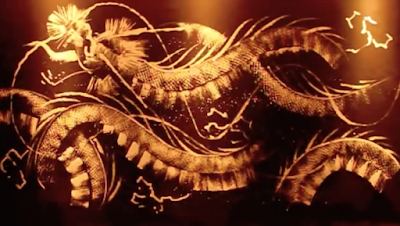
Video of the paining of a golden dragon by Takeshi Sato

When many visualise their thoughts of Japan the first concepts that spring to mind are Toyota or Sony or the Nintendo Wii. And not much seems to have changed in a decade or more. However, in this country, often perceived to be on something of a downhill slope when it comes to the new, Takeshi Sato and his friends are proving everyone would benefit from taking a closer look and see that creativity remains innovative and powerful in Japan. And just like David Bowie there really is Life on Mars. And it's not just sentient, it's overwhelmingly vibrant.


Takeshi Sato creating a new work of art

Thursday, November 5, 2015

Building a Billion Dollar Brand - in Japan

First draft complete! A little over fifteen years ago something fundamental changed in the Japanese landscape. Up until that time the perceived wisdom had been that a foreign brand entering the market would need a local partner; someone who knew how to operate on the ground. And then adidas decided to go solo, cold turkey if you will, and take direct control of its brand in Japan. Within a decade the experiment had produced a billion dollar company that had redefined the Japanese market model.

I was lucky enough to be there at the start and over the following years worked as part of the senior management team as we grew the business from a serviced office with a handful of people and zero sales to being the dominant sports brand in Japan. And many times over the years I've been asked to write the story, something that I have always declined to do so. Writing a "kiss & tell" somehow just felt wrong.

And then in early 2015 it was suggested I write the story around the business model; exactly how did we build a billion dollar brand in Japan? And that I could write. Eliciting the thought process and occasionally hilarious, I recount how we approached each challenge in turn until the brand became 50% larger than our respected rivals from across the pond. And now the hard part begins; editing.  After that though, might just be time to get a real job. Unless I start another book of course.


Thursday, October 8, 2015

Kagurazaka - a village within a city

Kagurazaka, a small neighbourhood hidden in plain sight and tucked away in the centre of Tokyo, is strangely relatively unknown. It was traditionally a focus of manga artists and the publishing industry, boasted a thriving geishi culture and is home to seemingly hundreds of outstanding little restaurants and bars. For many years it was also home to Adidas that had set up in a Norman Foster designed building in the area (though the building is now gone, having not survived too well during the earthquake of March 2011).

Stepping off the main strip you quickly find yourself lost in a maze of narrow back streets, barely wide enough for two to walk shoulder to shoulder. The occasional geisha still frequent these alleyways as they stroll to the expensive kaiseki restaurants where they entertain the exclusive clientele throughout their meal. It's also home to the French community in Tokyo, the school being close by and the French Institute running a stream of cultural events.

Historically, the area was daimyo (feudal lord's) land to the north of Edo Castle where a bridge crossed the moat, which is now used as a fishing pool. Temples abound and the sakura, Cherry Blossom, is stunning in early spring. Everything has a story to it and even the rare tidal-flow street that reverses traffic direction in the morning (local folklore suggesting this was to allow an influential politician to visit and then quickly leave his "hobby" during the 1970's) adds to the charm. And you can walk the area in days or minutes. Up to you, but there is always something interesting to see and experience. Not bad considering in March 1945 it was a display of nothing but scorched earth.


Tuesday, May 6, 2014

The children of Rikuzentakata - a thank you letter

I received an email last week. It was a thank you message to adidas, forwarded to me by my old company. In 2012 I'd arranged for the mayor of the town of Rikuzentakata to come and talk to us about his vision for the future. We didn't want him to talk about the tsunami but that was inevitably part of the story. He wanted to change his town so it would be somewhere families would want to live and children would want to stay. Before the wave it was already declining and the events of that day just accelerated the trend.

Coming out of this talk was the beginning of a relationship between the town and the company. People volunteered their time to visit the schools and events were arranged for the children to enjoy. One of the senior team even took the idea to a global level and this resulted in the home town of adidas becoming twinned with Rikuzentaka itself.

Another act was to provide a new baseball uniform for the children, and this brings me back to the letter. It wasn't simply a note of thanks but it explained the importance to them I'm sure no one had realised in advance. The letter explained that before the tsunami there had been three schools but afterwards these were merged into one. The loss of life, facilities and subsequent relocation of families had meant three schools were no longer viable.

The letter explained that at first the children had difficulty coming together. There were rivalries between the different groups and this extended even to the sports field where they found it hard to work together. The letter goes as far as saying they didn't think they would ever see themselves as being one team. And then adidas provided them with a new uniform. It had brought everyone together. Now they were all the same. They felt completely different and much more positive. Now they were one team. 


Wednesday, March 19, 2014

So just how do you pronounce Pokemon

Today it was announced that Pikachu, the small, yellow Pokemon (who closely resembles a friend of mine) will be captaining the supporters for the national team at the World Cup in Brazil in a couple of months. That the announcement was reported to have been made by adidas raises an interesting question. Just exactly how do you pronounce Pokemon and while we're at it, it's addi-das, not adee-das by the way.

Around the world Pokemon seems to be pronounced po (as in "poke") ki (as in "key") mon (as in "mon"). Actually, its not too easy to write pronunciations but I hope you get the gist. This is actually a little off base. As with many western words adopted into Japanese "Pokemon" is a contraction of its original English phrase. This is common in Japan so for example a car navigation system is called a "navi" and an air-conitioner is called an "air-con". Interesting the reverse is also occasionally true, for example "bra" and "flu" are always referred to as "brassiere" and "influenza" in Japanese.

So, to pronounce it correctly, it's important to go back to the origins of the name itself. And the origin of "Pokemon" is "Pocket Monster" and pronounced with a short "o" (as in "pocket") rather than a long one (as in "poke"). At some point someone outside Japan read it, mispronounced it, and it stuck. Same for adidas really, but the guys have given up the fight on that and get on with playing sports instead of worrying about a name. Good luck to the Samurai Blue! - Now if only we could get the rugby team to change its name from The Brave Blossoms....